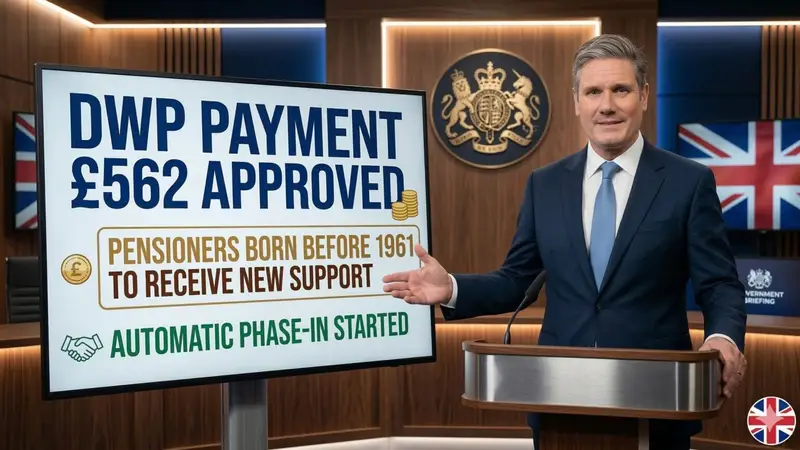
Over the past few days, many pensioners across the UK have been hearing about a £562 DWP payment that has reportedly been approved for people born before 1961. The news has quickly gained attention online, especially among retirees who are already keeping a close eye on any financial support announcements.
With everyday costs still higher than they were a few years ago, even a modest increase in income can make a noticeable difference. That’s why this update has created both excitement and confusion — many people want to know whether this is a one-off payment or part of a wider pension change.
Here’s a clear explanation of what the £562 support actually means and who may benefit from it.
Why the £562 Payment Is Being Discussed
The figure of £562 is linked to recent adjustments connected with State Pension payments rather than a brand-new standalone benefit.
Each year, pension payments are reviewed under the UK’s Triple Lock system, which ensures pensions increase based on inflation, wage growth, or a minimum guaranteed percentage. For the latest review period, wage growth played a major role, leading to a noticeable rise in pension income for many retirees.
When calculated over a full year, the increase works out at roughly £562 extra annually for pensioners receiving the full new State Pension. This is why many headlines describe it as a “£562 payment.”
In reality, it represents an increase spread across regular payments.
Why Pensioners Born Before 1961 Are Mentioned
The reference to people born before 1961 mainly relates to State Pension eligibility.
Individuals in this age group are either already receiving their State Pension or are reaching pension age around the time new payment rates take effect. Because of this, they are among the first to benefit from updated pension amounts.
The date does not create a new special category — it simply identifies those currently within the pension system.
Is This a One-Off DWP Payment?
This is where many misunderstandings appear.
The £562 amount is not a single lump-sum payment sent separately by the Department for Work and Pensions. Instead, it reflects the total yearly increase added to pension income after updated rates begin.
Rather than receiving one payment, pensioners will notice slightly higher amounts arriving during their usual payment schedule.
When the Increased Payments Will Start
The updated pension rates are expected to apply from the start of the new financial year in April 2026.
Once implemented:
- Payments adjust automatically
- No application is required
- Pensioners continue receiving money through existing payment methods
Most people will simply see their regular pension amount increase.
Who Is Likely to Receive the Full Increase
The exact amount varies depending on individual circumstances. Pensioners receiving the full new State Pension are most likely to see an increase close to the £562 yearly figure.
Factors affecting payment size include:
- National Insurance contribution history
- Type of State Pension received
- Additional pension income or credits
Some pensioners may receive a smaller increase depending on their records.
Why Pension Payments Are Increasing
The government adjusts pensions annually to help retirees keep up with economic conditions. Over recent years, rising living costs have placed pressure on fixed retirement incomes.
The Triple Lock system was designed to prevent pension value from falling behind average earnings or inflation over time. When wages grow strongly, pension increases become larger as well.
This year’s adjustment reflects that mechanism in action.
How the Money Will Be Paid
The Department for Work and Pensions handles payment updates automatically. Pensioners do not need to submit forms or make new claims.
Payments will continue to arrive:
- Weekly or every four weeks
- Into the same bank account already registered
- With updated payment amounts included
Letters confirming new rates are usually sent before changes take effect.
What Pensioners Should Check Now
Even though no action is required, it can be helpful to review personal details to avoid issues later.
Pensioners may want to:
- Ensure bank details are correct
- Check National Insurance records
- Review pension statements
- Watch for official DWP notifications
These small checks help ensure payments continue smoothly.
Could the Increase Affect Taxes?
Some retirees may notice that higher pension income brings them closer to income tax thresholds, especially if they have private pensions or savings income.
This doesn’t affect everyone, but it’s worth reviewing total annual income once new payment rates begin.
Public Reaction to the Update
Many pensioners have welcomed the increase, saying any additional income helps manage everyday expenses such as food, heating, and transport.
At the same time, some groups argue that rising costs still outpace income growth, meaning further support may be needed in future years.
Regardless of opinion, the increase confirms that pension adjustments remain a key part of government support for older citizens.
Avoiding Confusion Around Online Headlines
Financial updates often spread quickly online, and headlines sometimes simplify complex changes.
Important points to remember:
- The £562 amount is an annual increase
- It is not a bonus payment
- Payments depend on pension entitlement
Understanding this helps prevent misunderstandings about eligibility.
What This Means for Pensioners Going Forward
While the increase may not completely offset rising costs, it provides additional stability for many households relying mainly on State Pension income.
Regular adjustments ensure pensions continue to reflect broader economic changes, helping retirees maintain purchasing power over time.
Future increases will depend on inflation and wage growth during upcoming review periods.
Final Thoughts
The approval of a £562 DWP payment for pensioners born before 1961 has generated significant attention, but the reality is straightforward. The figure represents an annual boost to State Pension income rather than a one-time payout.
For eligible pensioners, the good news is that the increase happens automatically, with no application required. Over the coming months, many retirees will simply notice slightly higher payments arriving as part of their normal pension schedule.
In a time when financial stability matters more than ever, even gradual increases can provide reassurance and help older households plan their budgets with greater confidence.